
How Arrest Warrants Work in Meigs County
Every Meigs County arrest warrant starts with a sworn complaint and facts supporting probable cause. Tennessee Rule of Criminal Procedure 4 lets a magistrate or clerk issue a warrant or summons once that showing is made. General Sessions is where county criminal process often begins in Meigs County. A felony can later move into the 9th Judicial District Criminal Court or the Circuit Court structure by transfer, indictment, or presentment. The judicial officer who issues the process also sets bond. The sheriff's Warrants Division holds arrest warrants and civil papers, connecting courthouse records to the jail. No countywide search page makes those warrant records public.
Meigs County Arrest Warrant Complaint and Review
A complaint or affidavit lays out the facts for judicial review. The magistrate may question the complainant or witnesses under oath. When the facts meet the legal standard, the court can issue an arrest warrant to an authorized officer or choose a criminal summons where allowed. The General Sessions clerk records issuance under Rule 4. The Tennessee AOC rules index connects Rule 4 with the related criminal procedure rules. It describes the state process, not whether a particular Meigs warrant exists. Ask the clerk which court file applies and whether the complaint or affidavit is open, sealed, or partly redacted. That AOC page is a state procedure index with no live Meigs County results.
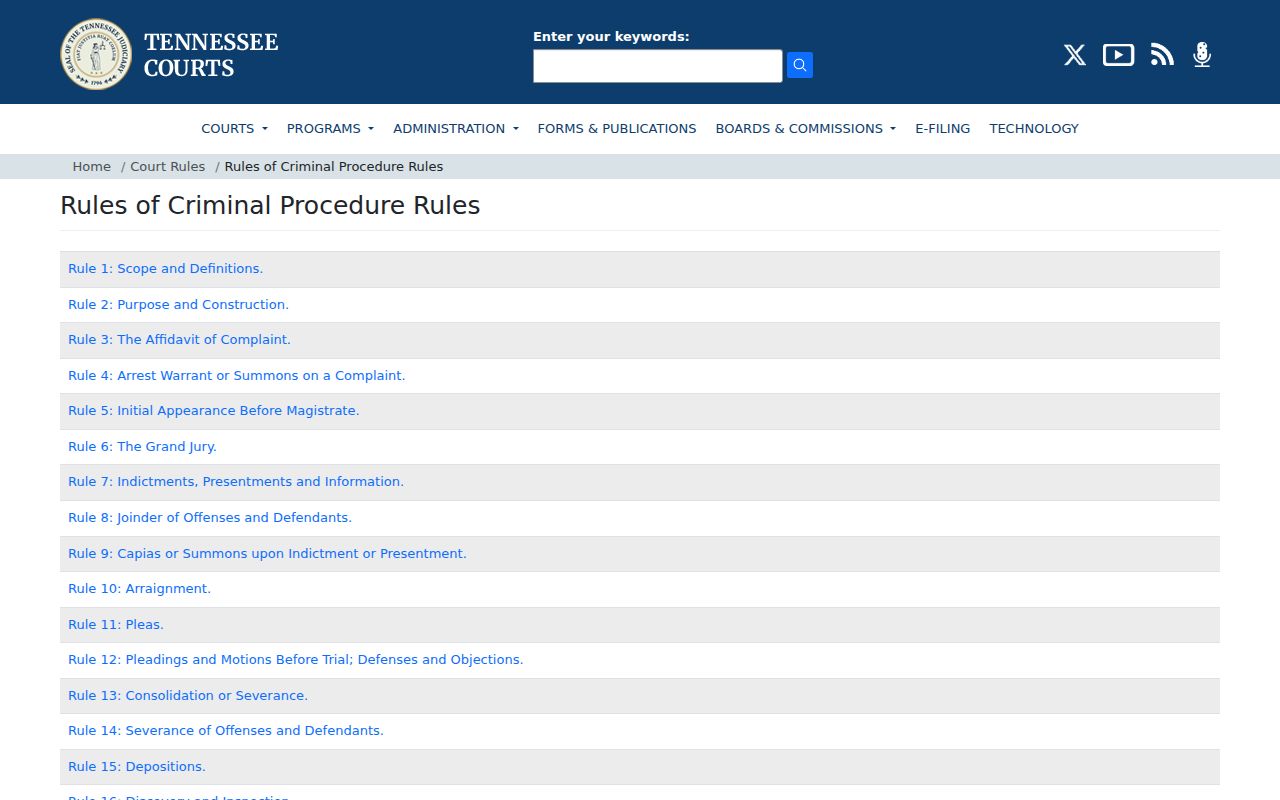
Read the state rule for procedure, then ask the Meigs County issuing court for the current case record.
Arrest Warrants: What They Contain
The blank Tennessee arrest-warrant form lists a case number, state control number, defendant fields, charge, witness blocks, bond, issuing official, and an officer return. It also requires a copy of the affidavit of complaint. Those fields can help a caller identify the record. A Meigs County public copy may not show every field.
| Case and control numbers | Identify the court process. Meigs publishes no numbering format. |
|---|---|
| Charge and complaint | Describe the legal basis; affidavit access may be limited. |
| Bond | Amount and conditions are case-specific, not a county schedule. |
| Issuing official | Shows which court authorized the process. |
| Officer return | May record service or an attempt to locate the person. |
Personal descriptors can be sensitive. Keep names, birth dates, and addresses out of any public post. The blank arrest form from Tennessee Courts holds no private person's information.
Ask the Meigs County court which fields are public in the specific case.
Meigs County Arrest Warrants in District 9 Criminal Court
County criminal matters in Meigs County often start with a General Sessions complaint or preliminary hearing. A felony case can transfer to the 9th Judicial District Criminal Court or proceed after a grand-jury indictment or presentment. As the case moves, the record holder can change, so an old notice may name an office that no longer controls the next court event. The county Circuit Criminal page gives the courthouse location and main line. The Circuit Clerk's page offers the clerk route for Circuit Criminal and General Sessions administration. Ask for the current court and case number before requesting a copy or arranging an appearance. The Circuit Criminal page names the court channel but offers no public warrant lookup for Meigs County.
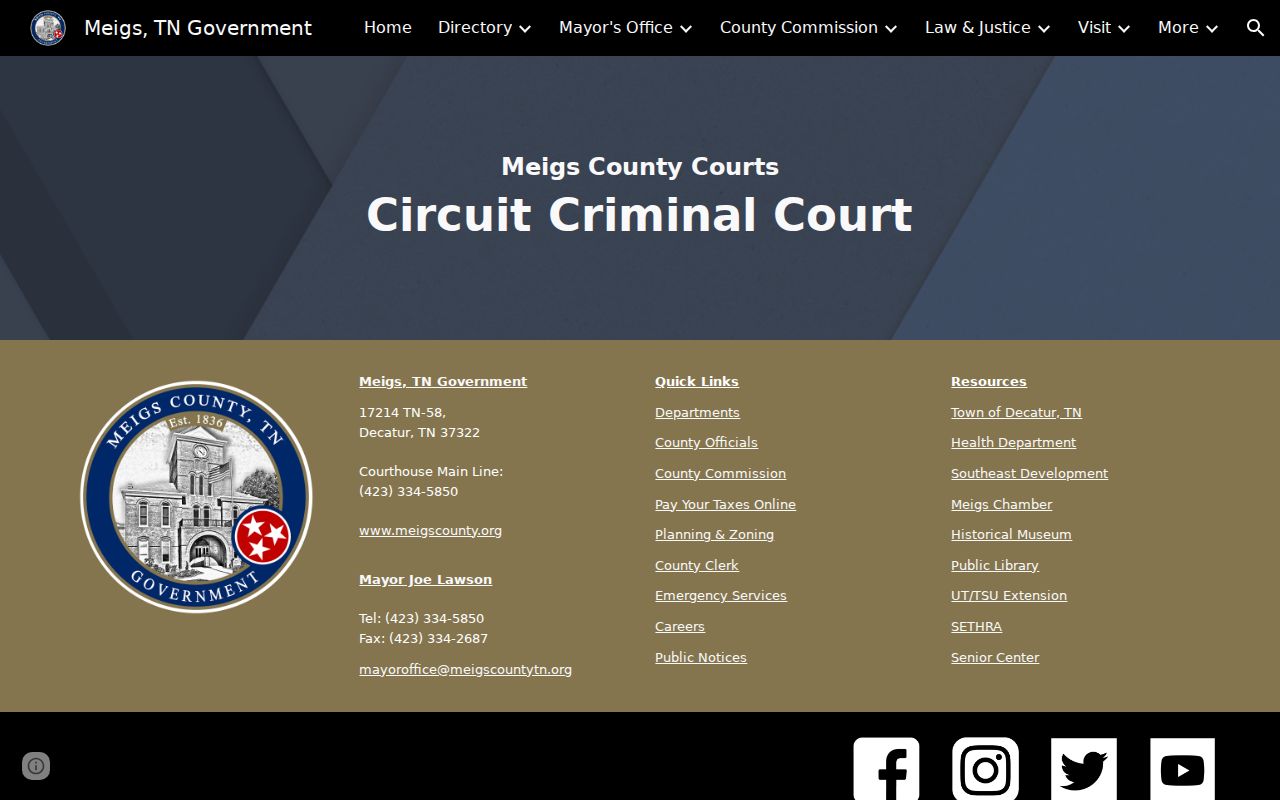
A Meigs County clerk referral can identify the court but may not confirm a sheriff service entry.
How Warrants Get Served in Meigs County
The Meigs County sheriff's office keeps county arrest warrants and civil papers in its jail computer systems. The county posts no assignment table for every service. A Decatur police officer, Tennessee Highway Patrol officer, sheriff's deputy, or another lawful officer may execute process depending on authority and location. The town police page is not a warrant lookup, and the sheriff is not the only serving agency. Booking and an initial appearance follow arrest. Meigs County publishes no local timing, after-hours bond window, or accepted payment types. The jail's public page describes the facility, not a surrender or bond procedure. Call the sheriff and issuing court before appearing.
Meigs County Sheriff's Department
410 River Road, Decatur, TN 37322
(423) 334-5268
Meigs County Arrest Warrants Have No Published Number Pattern
Meigs County publishes no local warrant-number format, search field list, status vocabulary, or update schedule. Never guess a year prefix or court code from a neighboring county. The case number printed on an official document is the identifier the clerk needs. The blank form has separate spaces for the case number and State Control number. If you receive only one, ask which the court wants on a request. The warrant's issue date and officer return can also separate a current record from an older docket entry.
Arrest Warrant, Summons, and Bench Process
A summons directs a person to appear without an immediate arrest command. An arrest warrant lets an officer take the named person into custody after probable-cause review. A bench warrant is court-directed process, often after a missed appearance. A capias may follow indictment, presentment, or another court order. The exact label on the Meigs County file matters.
| Document | Common reason | First Meigs contact |
|---|---|---|
| Arrest warrant | Complaint with probable cause | Issuing court and sheriff |
| Summons | Order to appear | Court clerk |
| Bench warrant | Nonappearance or court noncompliance | Court that set the duty |
| Capias | Indictment, presentment, or court direction | Criminal/Circuit clerk |
Meigs County warrant files carry no public status label; call the issuing court and ask what the process requires now.
Meigs County Arrest Warrant Files Have Juvenile Limits
Meigs County Juvenile Court handles delinquency, unruly, and dependency matters. So do its related cases. Tennessee law keeps those files closed, and the county publishes no juvenile docket search. A parent, guardian, or lawyer can call the courthouse about authorized access and the identity documents required. The county's Juvenile Court page routes visitors to the office. It shows no child case details. A denial may reflect confidentiality rules, not a lack of court process. Don't read a limited answer as final. Never seek or share a child's name, address, photo, or case description in a public forum.
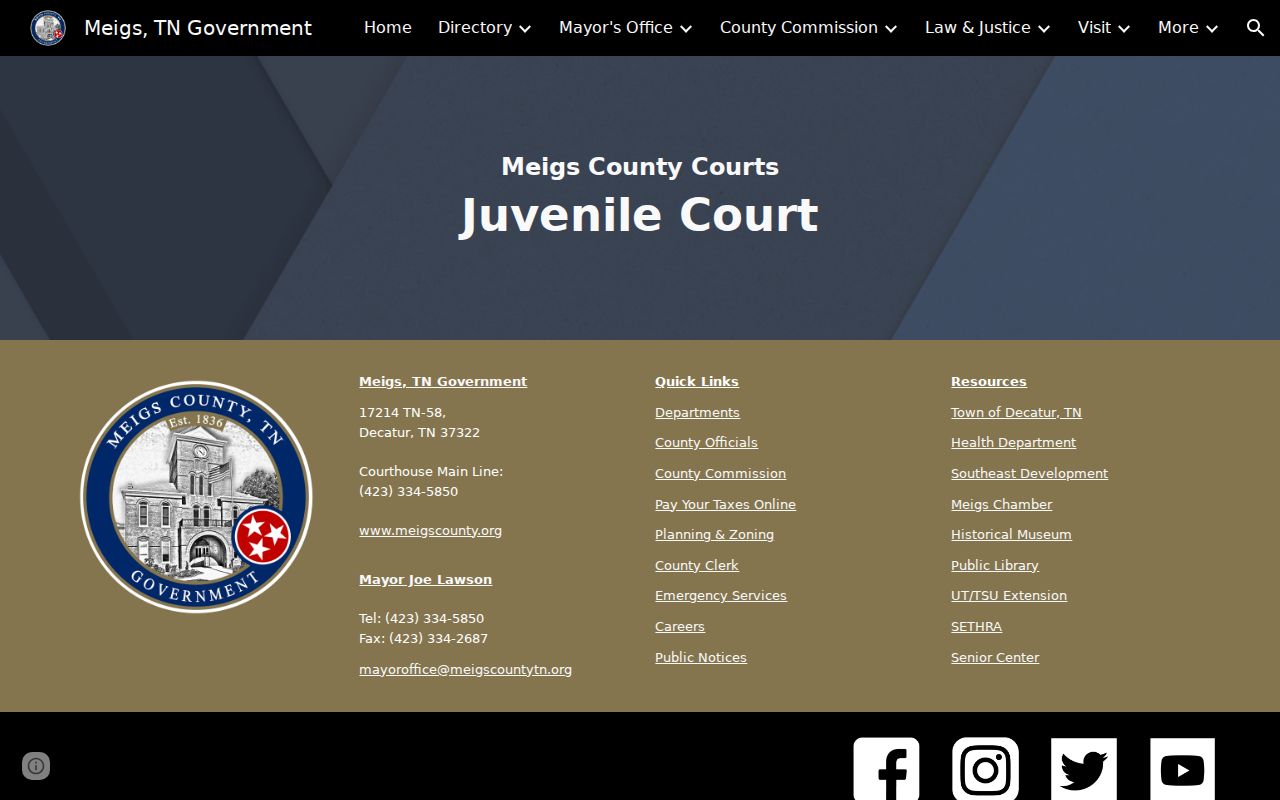
Use the court's official contact to learn who may request a protected record.
Meigs Warrant Advice Before an Appearance
Think a Meigs County arrest warrant carries your name? Call the sheriff first. Ask which court issued it, whether bond is set, and who should arrange an appearance. Meigs County publishes no surrender sheet, no walk-in window, and no no-bond procedure. Walking into the jail unannounced may not resolve the case the way you hope.
Confirm before going. Ask the issuing court and sheriff for the approved location, time, bond terms, and documents before attempting surrender or payment.
A lawyer in Meigs County can sort release from custody, warrant recall, a first appearance, and defense of the underlying charge. Each is a separate outcome. Keep every court order and ask the Sheriff's Warrants Division how it records the update.
Meigs County Arrest Warrant Clerks and the AOC Directory
Meigs County names Darrell Davis as Circuit Court Clerk and Donna Moore as Clerk & Master. The Tennessee AOC directory lists offices, not warrant status. Confirm current assignments by phone. The Circuit Clerk keeps Circuit Criminal and General Sessions records. The Clerk & Master handles Chancery, probate, domestic, child-support, and execution files. Family contempt may involve a civil body attachment rather than an arrest warrant, so match the clerk to the court named on your notice.
Meigs County Arrest Warrants and Later Case Dates
Posting bond, if the court allows it, covers release and the promise to return. It does not dismiss the charge. Ask the Meigs County clerk for the next date, the courtroom, and any written order. Get the paperwork. If the warrant is recalled or quashed, request the docket entry and ask whether the sheriff received it. A public-record copy may leave out sealed affidavits or investigative detail. Rule 34 and state law govern that access. Check current status with the issuing court or sheriff, since the county posts no public list and updates on no fixed schedule.